Useful Quechua and Spanish Phrases for Your Cusco Trip

Useful Quechua and Spanish Phrases for Your Cusco Trip
Quechua is still spoken by millions across the Andean region. You don't need to master it, but a few words spark genuine smiles from locals, guides and communities.
Basic Quechua greetings
- Napaykullayki — Hello / I greet you (formal).
- Allillanchu? — How are you?
- Allillanmi, Diospagarasunki — I'm well, thank you.
- Ratukama — See you later.
Useful phrases for markets and tours
- Añay / Sulpayki — Thank you (variants depending on the area).
- Hayk'ataq? — How much does it cost?
- Ama hina kaychu — Please.
- Allin p'unchay — Good morning.
Words you've already heard without knowing it
- Apu: sacred mountain (Ausangate, for instance, is an apu).
- Pachamama: Mother Earth, central to Andean cosmovision.
- Wayki / Panay: brother / sister, used affectionately among locals.
Basic Spanish if you don't speak it
If your Quechua doesn't go beyond the greeting, Spanish remains the main language to get around Cusco:
- ¿Cuánto cuesta? (How much is it?) — for markets and taxis.
- ¿Dónde está el baño? (Where's the restroom?) — survival phrase #1.
- No entiendo, ¿puede repetir? (I don't understand, can you repeat?) — useful with strong regional accents.
- La cuenta, por favor (The check, please) — at restaurants.
Why the effort is worth it
Using even a couple of Quechua words with guides, mule handlers or market vendors tends to create a different connection — it reads as a gesture of respect for the culture, not just tourist curiosity.
Want an experience with guides who speak Quechua and share their culture firsthand? Check our tours.
Quechua numbers for the market
Using Quechua numbers when you pay usually earns a smile from vendors:
- Huk — one
- Iskay — two
- Kimsa — three
- Tawa — four
- Pichqa — five
- Suqta — six
- Qanchis — seven
- Pusaq — eight
- Isqun — nine
- Chunka — ten
Words you'll see on signs and place names
Many places in Cusco have Quechua names that describe what they are. Knowing a few words helps you understand them:
- Pata: terrace (as in Phuyupatamarca).
- Wasi: house.
- Rumi: stone (Hatun Rumiyoc street, home of the 12-angled stone, means "the one with the big stone").
- Hatun: big.
- Mayu: river (the Urubamba river was called Willkamayu, "sacred river").
- Qocha: lake.
- Inti: sun (hence Inti Raymi, the festival of the sun, and Intipunku, the Sun Gate).
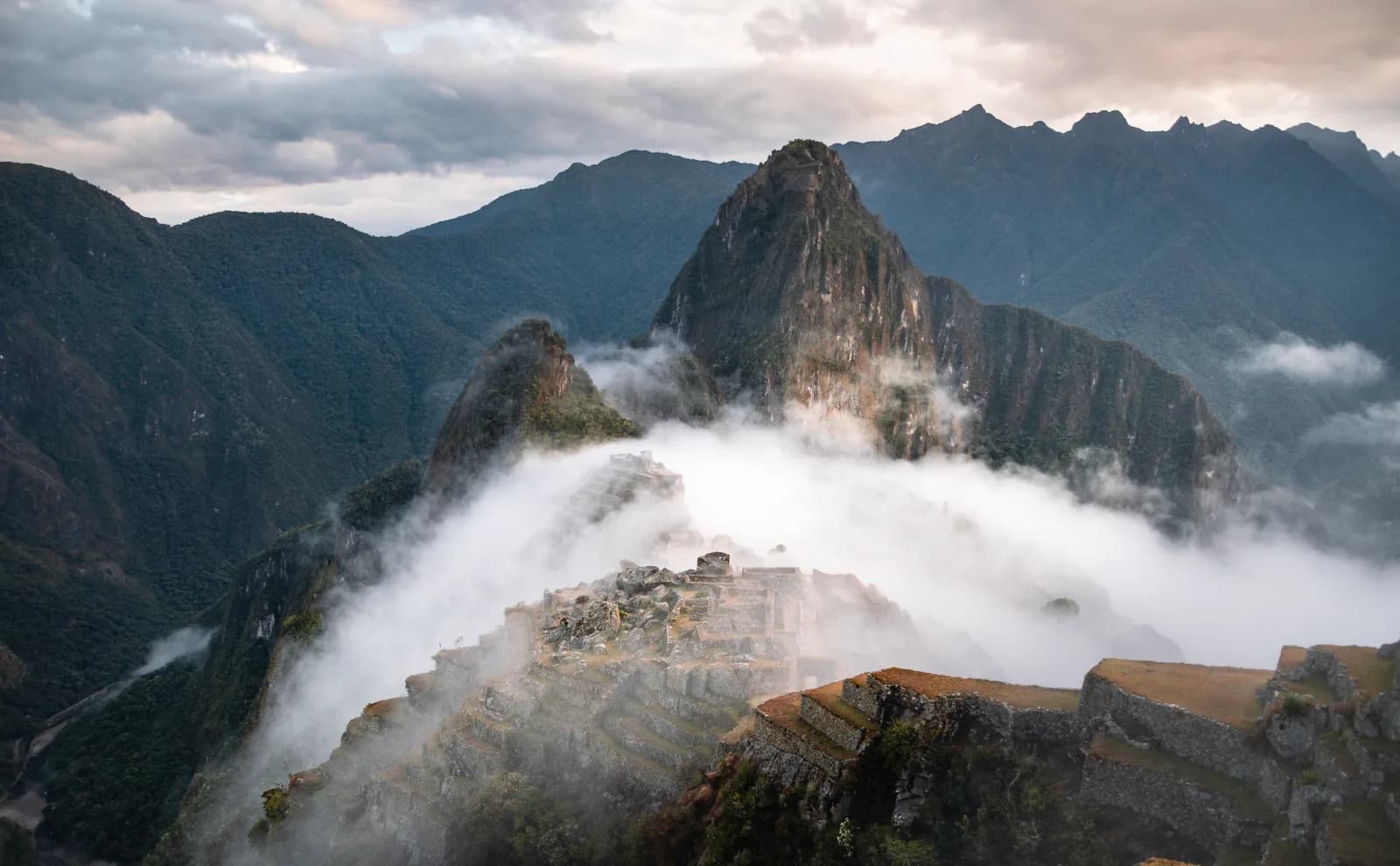
- Machu / Wayna: old / young. Machu Picchu means "old mountain" and Huayna Picchu "young mountain".
On tours
- Tupananchiskama — Until we meet again (a very common farewell).
- Sumaq — Beautiful, lovely. Perfect in front of a view.
- Chiri — cold. You'll hear it on Rainbow Mountain mornings.
Peruvian Spanish: words that differ
If you've learned Spanish elsewhere, some words may confuse you:
- Chompa: sweater.
- Combi: public-transport minibus.
- Jalar: to give someone a ride ("te jalo al hotel", I'll drive you to the hotel).
- Al toque: quickly, right away.
- Menú: the cheap multi-course set lunch.
Where to practice
The best place to use your Quechua words is outside the city: in Chinchero, on the Sacred Valley VIP, the weavers usually welcome a greeting in their language warmly. And to understand more of the culture behind the words, read the meaning of Machu Picchu.
Frequently asked questions
Do I need to speak Quechua to travel to Cusco?
No, Spanish is enough to get around normally; Quechua is a cultural bonus, not a necessity.
Do all Cusco locals speak Quechua?
Many are bilingual (Quechua-Spanish), especially in rural communities; in the city, Spanish predominates.
Are there regional differences in Quechua?
Yes, regional variants of Quechua exist; Cusco's is one of the most widely spoken and recognizable.