The Meaning of Machu Picchu: Symbols and History Explained

The Meaning of Machu Picchu: Symbols and History Explained
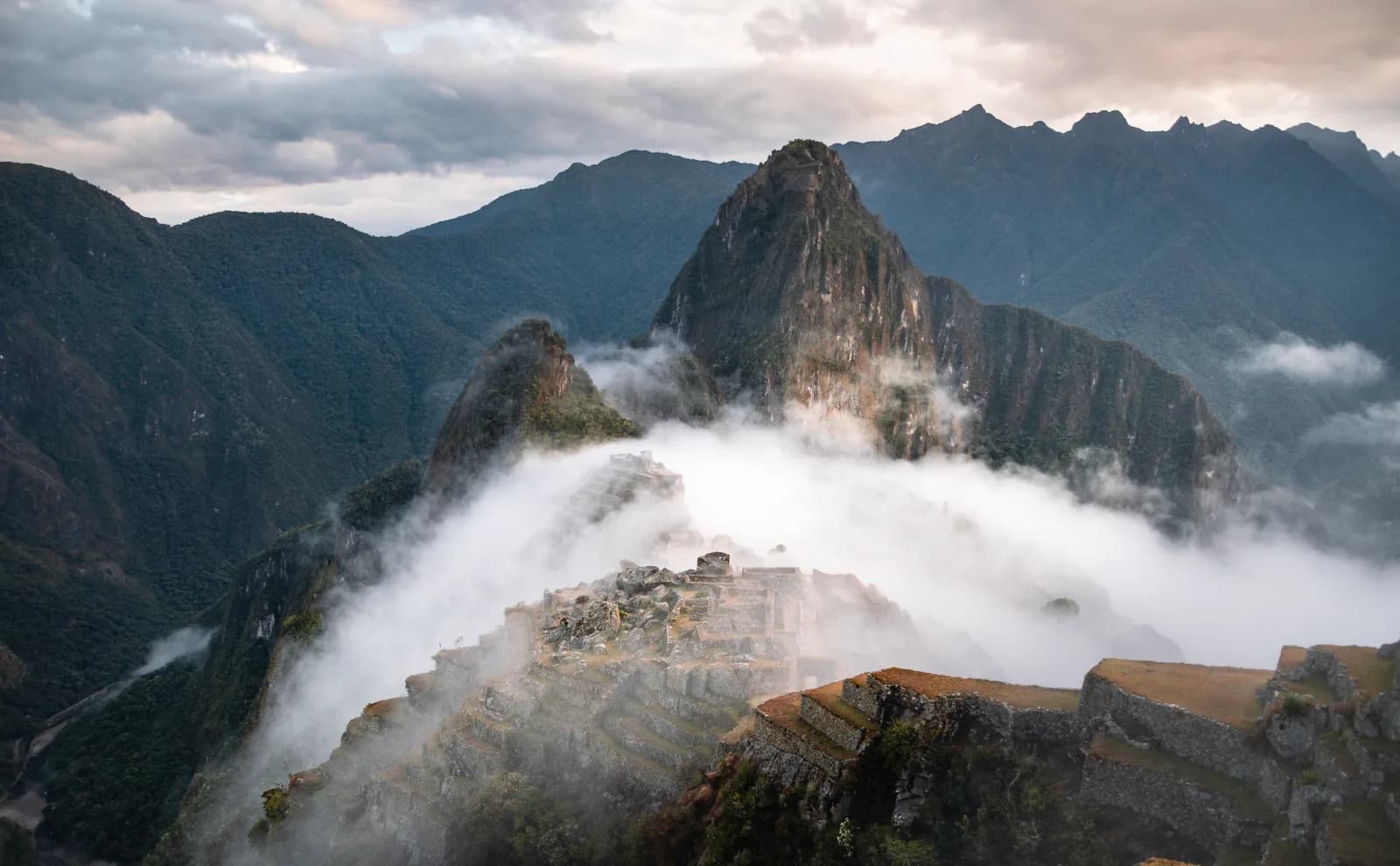
Machu Picchu means "old mountain" in Quechua: machu means old and picchu means mountain or peak. The name refers to the mountain rising behind the citadel, opposite Huayna Picchu, the "young mountain". Nobody knows for sure what the Incas called the city; Machu Picchu is the mountain's name, and it stuck.
Machu Picchu was built around 1450, during the reign of the Inca Pachacútec, and was abandoned barely a century later, following the Spanish conquest — which never found it. Here's what we know about its meaning.
What was it really built for?
The most accepted theory among archaeologists is that it was a royal estate and ceremonial center for the Inca nobility, possibly a retreat for Pachacútec, combining religious, astronomical and administrative functions. It wasn't a mass-population city — an estimated 750 people lived there at its peak.
The Intihuatana: the "sundial"
A carved stone block that functioned as an astronomical instrument, used to mark solstices and equinoxes. Its Quechua name roughly means "where the sun is tied" — believed to have had a ceremonial role linked to sun worship, central to the Inca worldview.
The Temple of the Sun
A semicircular structure built over natural rock, with windows astronomically aligned so sunlight enters precisely on specific dates of the year (such as the June solstice). It's among the site's most refined architecture.
The Temple of the Three Windows
Linked to the Inca origin myth (the Ayar brothers), though interpretations vary. Its three trapezoidal windows are one of the most photographed examples of Inca architecture.
The agricultural terraces
Over 100 stepped terraces that allowed farming on steep mountain terrain, while also preventing erosion and draining rainwater — an engineering solution that still works 500 years later.
Why did the Spanish never find it?
Its remote location, hidden among mountains with no visible access from the valley, meant the Spanish conquest never learned of its existence. It remained practically intact until its international "scientific discovery" in 1911, though local communities already knew of the site.
What does it represent today?
Machu Picchu was declared a UNESCO World Heritage Site in 1983 and is one of the New7Wonders of the World. Beyond tourism, it remains a site of deep cultural significance for Andean communities.
To see the site with a guide who explains every symbol in context, check our Machu Picchu tours.
The citadel's sectors and what they meant
Archaeologists divide Machu Picchu into two large zones, separated by a wall and a dry moat:
- The agricultural sector: the southern terraces, where crops were grown and storehouses stood. Today it's the first area you see on entering.
- The urban sector: itself split into an "upper" part (Hanan), with temples and elite residences, and a "lower" part (Hurin), with homes and workshops. This division into two complementary halves is typical of Andean organization.
The Sacred Plaza
Next to the Temple of the Three Windows stands the Main Temple, with enormous walls, and the so-called Priest's House. Together they form the Sacred Plaza, the ceremonial heart of the site. From there you climb to the Intihuatana.
The Temple of the Condor
A natural rock formation worked to evoke the outstretched wings of a condor, with a carved stone on the ground interpreted as its head. The condor was the messenger between the world of the living and the world above, one of the three sacred animals of the Andean worldview.
The three worlds: condor, puma and serpent
Many Inca symbols make more sense once you know their three-level view of the universe:
- Hanan Pacha (the world above), represented by the condor.
- Kay Pacha (this world, of the living), represented by the puma.
- Uku Pacha (the world below, of the dead and of seeds), represented by the serpent.
You'll see these animals at Machu Picchu, but also in Cusco: according to tradition, the Inca city was shaped like a puma, with Sacsayhuamán as its head. We explain it on the City Tour.
The sacred mountains
Machu Picchu wasn't built just anywhere. It's surrounded by apus, mountains considered sacred, such as Huayna Picchu, Putucusi and, in the distance, the snow-capped Salkantay. Many buildings face toward them. That's why the landscape is part of the site's meaning, not just a pretty backdrop.
Seeing the meaning in person
All of this is far easier to understand in front of the stones, with someone explaining it in context. On our Machu Picchu 2D/1N (US$380), the guide walks the circuit with you early, with time to stop at every temple. And to understand how the colonial city was built on top of the Inca one, read Inca vs colonial architecture in Cusco.
Frequently asked questions
Who built Machu Picchu?
It was built under the reign of the Inca Pachacútec, around the mid-15th century.
Why was it abandoned?
There's no full consensus, but it's linked to the fall of the Inca Empire following the Spanish conquest, and possibly diseases that were already spreading from the north before the Spanish arrived.
Is it true the Spanish never found it?
Yes, there's no record that the Spanish conquerors knew of its existence; it stayed hidden from the outside world until the 20th century.